
Area Rug Size Guide Living Room: Choosing the Perfect Rug Dimensions
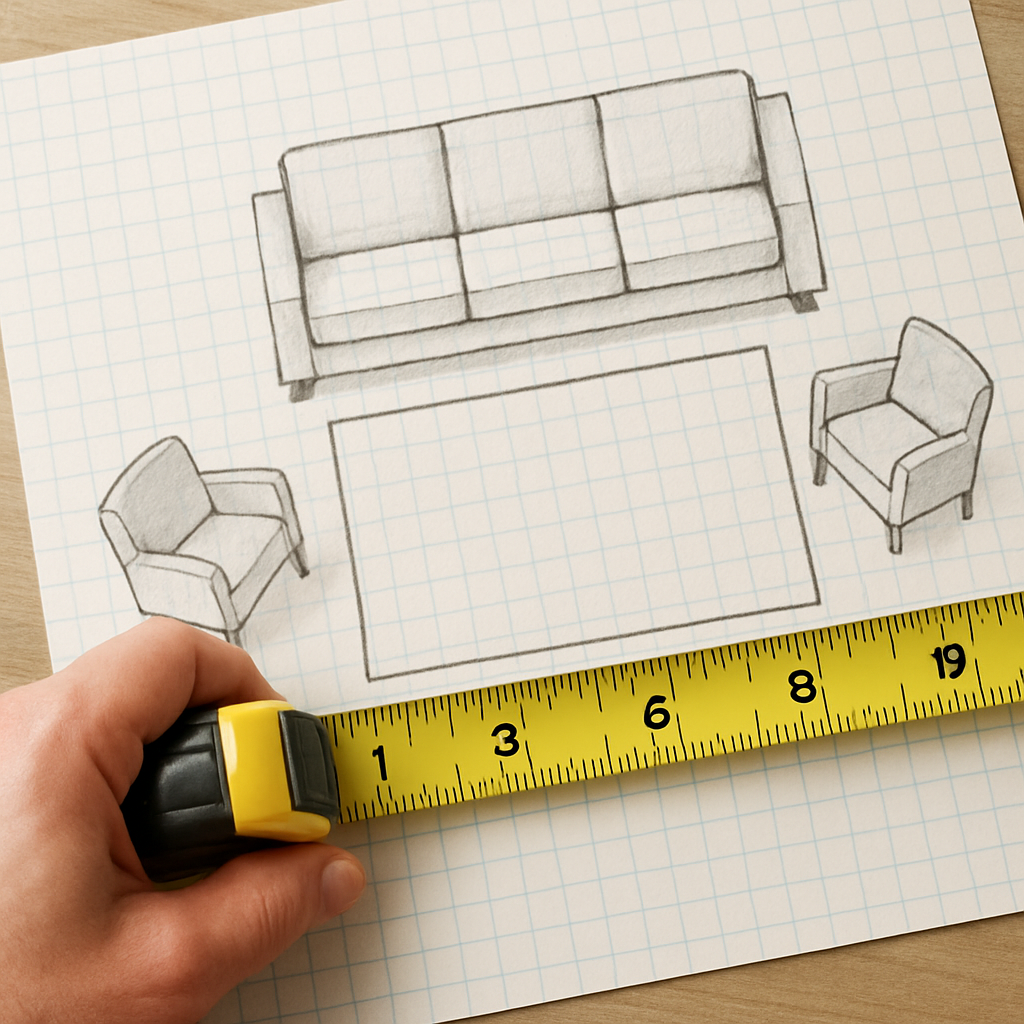
Picture this: you’ve just dragged a new sofa into the living room, the paint is still drying, and you stare at the empty floor wondering if that rug you love will actually fit.
That moment of uncertainty is what every homeowner feels when they start an area rug size guide living room quest. It’s not just about buying a square piece of fabric; it’s about creating a visual anchor that makes the space feel cozy, balanced, and, honestly, right.
So, how do we stop guessing and start choosing? First, we need to look at the furniture layout, not just the room dimensions. Think about where the front legs of your couch and chairs will sit—those legs should comfortably rest on the rug, giving the room a “tucked‑in” vibe.
And what about the shape? A rectangular rug works wonders in a typical sofa‑and‑two‑chairs arrangement, while a round rug can soften a formal seating area or a minimalist lounge.
Now, let’s talk numbers without overwhelming you. The most popular size for a standard living room is 8 × 10 feet, which usually leaves enough rug visible around the perimeter. If your space is a bit tighter, 5 × 7 feet can still do the trick as long as you position the furniture so the front legs stay on the fabric.
But here’s a little secret most retailers don’t shout about: a slightly larger rug—say 9 × 12 feet—can actually make a cramped room feel more spacious because it unifies the elements under one cohesive base.
Feeling a bit overwhelmed? Don’t worry, you’re not alone. We’ve all stood in the carpet aisle, squinting at a sample and wondering if we’re about to buy a floor‑covering disaster.
Let’s break it down together: measure your furniture first, picture the rug extending beyond the edges of each piece by a few inches, and then match that mental picture to a size chart. It’s like trying on shoes—you want a snug fit, not something that slides off.
Ready to turn that blank floor into a stylish foundation? Grab a tape measure, sketch a quick layout, and you’ll see the perfect rug size reveal itself. Let’s dive in and make your living room look—and feel—just right.
TL;DR
Choosing the right rug transforms a cramped living room into a balanced, inviting space by matching rug dimensions to your furniture layout and room flow.
Follow our simple step‑by‑step guide—measure, visualize, and pick a size like 8 × 10 or 9 × 12 feet—to ensure every piece feels perfectly anchored in your home today.
Step 1: Measure Your Living Room Space
Okay, you’ve already pictured the rug hugging your sofa and chairs. Before any buying frenzy, we need a solid foundation: the actual numbers of your room. Grab a tape measure, a notebook, and a cup of coffee, and let’s turn that vague feeling into a clear plan.
First thing’s first – measure the room itself. Walk along each wall and jot down the length and width in feet. If your living room isn’t a perfect rectangle, break it into smaller rectangles or L‑shapes and measure each segment. Write those numbers down; you’ll thank yourself when you’re not guessing at the checkout.
Tools matter. A steel tape measure gives the most accurate reading, but a laser distance measurer works fine too. And don’t forget graph paper – each square can represent a foot, letting you sketch a miniature version of the space without needing fancy software.
Next, note any obstacles: built‑in bookshelves, radiators, or a fireplace mantle. Measure the distance from those features to the nearest wall so you can see how a rug will sit around them. This step prevents the dreaded “rug stuck behind the couch” scenario.
Measure Your Furniture Footprint
Now shift focus to the pieces that will live on the rug. Measure the length of your sofa, the width of armchairs, and the depth of coffee tables. A handy rule of thumb is to let the front legs of larger items sit on the rug while the back legs can stay off – that creates a “tucked‑in” look without drowning the furniture.
Create a Scaled Layout
Take your wall measurements and draw a rectangle on the graph paper. Then, cut out paper pieces representing your sofa, chairs, and tables, using the same scale. Move the furniture cut‑outs around until you find a layout that feels balanced. When the front legs of every major piece rest on the drawn rug area, you’ve hit the sweet spot.
If you prefer a digital route, a simple free floor‑plan app can do the same job, but the tactile feel of paper often sparks better ideas – plus, you can tape the sketch to the wall and step back for a quick visual check.
At this stage, you’ll start seeing which rug dimensions keep everything anchored. For most living rooms, the sweet‑spot sizes hover around 8 × 10 feet or 9 × 12 feet. Want a deeper dive into those standard options? Check out The Ultimate Rug Size Guide: Room by Room and Size by Size for a quick reference chart that matches common furniture layouts to rug sizes.
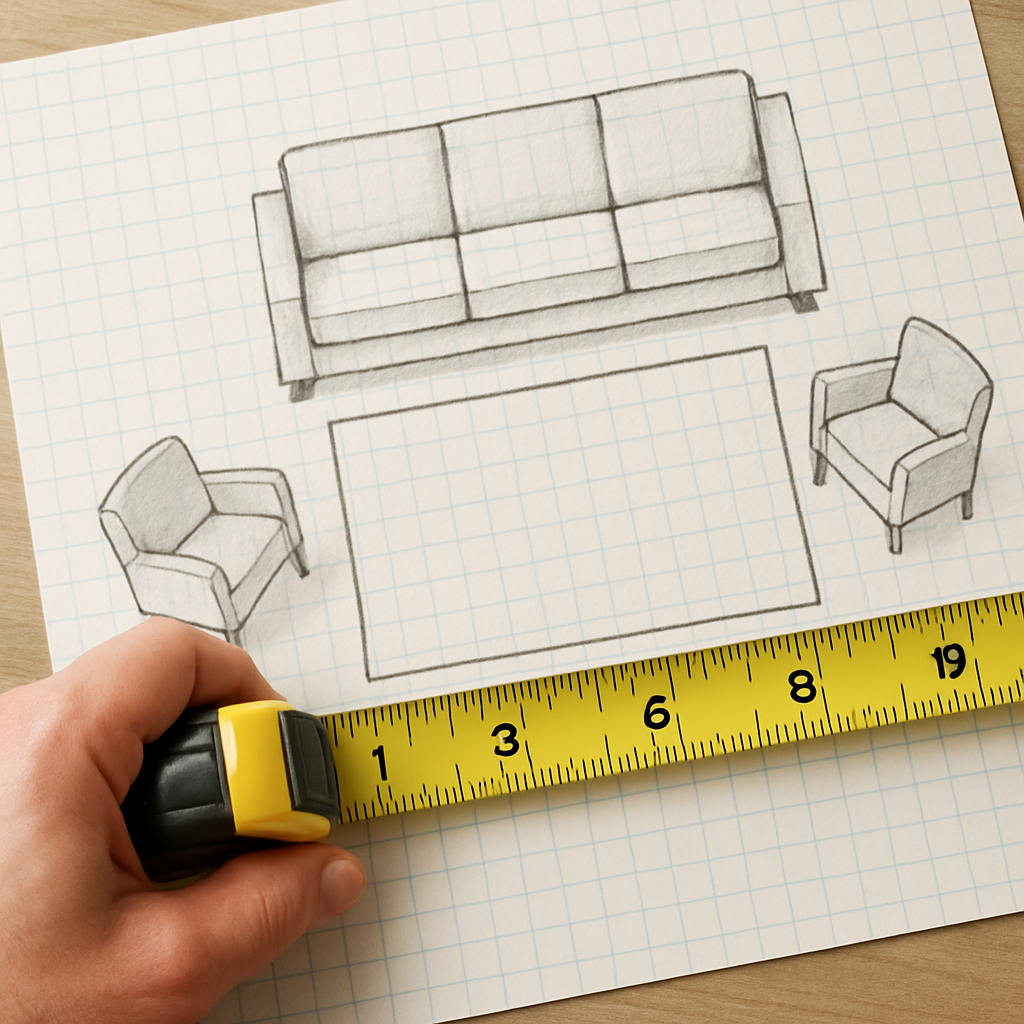
Quick checklist before you move on to step two:
• Room dimensions recorded in feet.
• Furniture footprints measured.
• Obstacles noted and distances logged.
• Scaled paper layout created with furniture pieces positioned.
• Rough rug size range identified (e.g., 8 × 10 ft or 9 × 12 ft).
With those numbers in hand, you’re ready to visualize the rug in real life and avoid costly returns. Grab that tape, sketch, and let the numbers guide you – the perfect rug is just a measurement away.
Now you’re ready to move forward.
Step 2: Choose the Right Rug Shape and Size Ratio
Alright, you’ve got your measurements, and the tape is still humming in your hand. Now the fun part begins: deciding whether your rug should be rectangular, round, square, or something a little more unexpected. The shape you pick will either pull the room together or make it feel a little off‑balance.
Shape matters more than you think
If your sofa sits against a wall and you have two chairs angled toward it, a rectangle usually feels safest. It mirrors the linear flow of the furniture and lets the eye travel smoothly from one piece to the next. But imagine a cozy reading nook tucked into a corner – a round rug can soften the hard lines, create a visual “hug,” and give that space a relaxed vibe.
Square rugs are a happy middle ground. They work well when your seating island is more of a box shape, like a low‑profile sectional with a coffee table centered underneath. The trick is to make sure the square isn’t so small that it looks like a rug coaster, and not so big that it swallows the whole room.
And don’t forget irregular shapes. An oval rug can elongate a narrow hallway while still providing a soft landing for a pair of side chairs. The key is to match the rug’s silhouette to the dominant lines of your furniture arrangement.
Size ratio basics
Now that you’ve narrowed down the shape, let’s talk numbers. A good rule of thumb is to aim for a rug that covers about two‑thirds of the visible floor space. In practical terms, the rug’s width should be roughly the same as the distance between the outer edges of your front‑leg furniture, plus a 12‑ to 24‑inch “breathing room” on each side.
For a classic 8‑by‑10 rectangle, that usually means the rug extends about 12‑18 inches beyond the front legs of the sofa and chairs. If you’re working with a 9‑by‑12, push that buffer to 18‑24 inches for a more spacious feel. The larger the rug relative to your seating island, the more “anchored” the room feels.
Round rugs follow a similar logic: measure the diameter across the longest line of your furniture layout, then add a foot or two all around. A 6‑foot round works nicely in a 12‑by‑15 room with a centered sofa, while an 8‑foot round can dominate a larger, open‑plan space.
Step‑by‑step check
- Lay a sheet of paper on the floor and trace the outer edges of your sofa and chairs.
- Measure the distance between the farthest points of that shape.
- Add 24 inches (or 12 inches if the room is tight) to each side.
- Match that total to the nearest standard rug size.
- Visualize the rug in the space using an online room planner or a simple paper cut‑out.
Doing this on paper feels a bit like a child’s craft project, but the tactile feedback helps you see if the rug will look like a cozy island or a floating carpet that’s about to drift away.
After you hit play, notice how the video walks through the same rectangle‑vs‑round decision we just discussed. Pause at the moment they overlay a rug mock‑up on a floor plan – that’s the exact point where you’ll want to pause your own planning and compare your measurements.
Finally, trust your gut. If a rug feels “right” when you stand on the floor and picture your coffee table and lamp resting on it, you’ve probably hit the sweet spot. If you’re still unsure, bring home a small sample or order a swatch; feeling the texture underfoot can be the deciding factor.
With the shape and size ratio settled, you’re ready to move on to styling the rug – layering, pattern pairing, and pulling the whole room together. Remember, the right rug is more than a floor covering; it’s the visual anchor that tells the rest of your décor where to gather.
Step 3: Align Rug Placement with Furniture Layout
Now that you know what shape and size to aim for, it’s time to actually put the rug under your furniture. This is where the magic of the area rug size guide living room really shows up – the rug becomes the stage and your sofa, chairs, and coffee table are the actors.
Start with the front‑leg rule
Imagine standing in the middle of the room and looking at the sofa. Do the front legs sit on the rug? If they do, you’ve instantly created a visual anchor that says, “Everything belongs here.” The back legs can peek out, but you’ll want at least three inches of carpet showing behind the front legs so the piece feels grounded.The Spruce explains that keeping front legs on the rug and leaving a small buffer helps anchor furniture.
What if you have a sectional that wraps around a corner? Treat each side as its own seating island. Place the rug so the front legs of both sections land on it, even if the back legs stay on the hardwood.
Map out a “rug footprint”
Grab a sheet of kraft paper or an old pillowcase and lay it on the floor where you think the rug will go. Then, walk the outline of each piece of furniture and mark where the legs touch the paper. When you step back, you’ll see a clear silhouette – that’s your rug footprint.
Does the footprint look like a solid rectangle with a little breathing room on all sides? If yes, you’re on the right track. If the shape feels jagged, you might need a larger rug or a different layout.
Check traffic flow
Even the prettiest rug placement falls apart if people have to dodge around it. Aim for at least six inches of clear floor space between the rug edge and any door swing or high‑traffic path. This keeps the room feeling open and prevents tripping hazards.
Remember the rule of thumb: the rug should be big enough that you can walk around it without stepping onto the carpet for a few strides.
Adjust for asymmetrical rooms
Not every living room is a perfect rectangle. If one wall is longer or you have a bay window, center the rug with the main seating group rather than the entire room. That way the rug still feels intentional, even if one side hangs a bit farther out.
And if you love a bold rug pattern, let it extend beyond the furniture on the longer side – the extra visual weight will balance the asymmetry.
Quick checklist before you click “add to cart”
- Front legs of sofa and chairs rest on the rug.
- At least 3‑inches of carpet shows behind each front leg.
- Minimum 6‑inch clearance for traffic pathways.
- Rug centered on the primary seating island, not necessarily the whole room.
- If the room is irregular, prioritize the furniture grouping over wall symmetry.
Take a step back, picture yourself sinking your feet into the rug, and ask, “Does this feel like the room’s natural foundation?” If the answer is a confident yes, you’ve nailed the placement.
When you finally lay the rug down, you’ll notice an instant shift – the space suddenly looks pulled together, like a puzzle piece finally snapped into place. That’s the payoff of a solid area rug size guide living room strategy: it turns a collection of furniture into a cohesive, inviting living area.
Step 4: Visualize Rug Sizes with a Comparison Table
Okay, you’ve measured, you’ve chosen shape, and you’ve aligned the front legs. Now comes the part that makes the whole process feel almost scientific: laying out the numbers side‑by‑side so you can actually see which size will make your living room sing.
Why do we love a table? Because it turns fuzzy intuition into a concrete decision. You can glance, compare, and walk away with a clear answer – no more second‑guessing at the checkout.
How to build your own quick‑look table
Grab a piece of paper or open a spreadsheet. Create three columns: Room Width × Length, Suggested Rug Size, and Reason it Works. Fill in the rows with the measurements you just recorded.
Here’s a ready‑made example you can copy‑paste. It covers three common living‑room footprints you’ll run into whether you’re in a cozy apartment or a sprawling house.
| Room Size (ft) | Recommended Rug (ft) | Why It Works |
|---|---|---|
| 10 × 12 | 5 × 7 | Leaves ~12‑inch border on all sides, lets front legs sit on the rug while keeping traffic lanes clear. |
| 12 × 15 | 8 × 10 | Provides a “floating” effect, anchors a sofa‑and‑two‑chairs island, and still shows floor around the perimeter. |
| 14 × 18 | 9 × 12 | Creates a generous visual base for larger sectional arrangements, prevents the rug from looking swallowed. |
Notice the pattern? Each recommended rug adds roughly 12‑24 inches of breathing room beyond the outermost front legs. That’s the sweet spot most designers quote when they talk about the “front‑leg rule.”
If you’re wondering whether a 5 × 7 rug will really fill a 10 × 12 space, check out this 5 × 7 ft abstract rug on Amazon. Reviewers love how it “fits perfectly” in rooms of that size, and the extra border still feels intentional.
Quick visual tip
Lay a sheet of kraft paper on the floor and trace the rectangle from the table above. Step back – does the paper feel like a solid island under your furniture, or does it look like it’s about to tip over? If it feels stable, you’ve nailed the size.
What about irregular rooms? Split the space into two zones (say a seating island and a reading nook) and make a mini‑table for each. Then compare the two tables side‑by‑side and decide if a single larger rug can bridge the gap or if you need two complementary pieces.
So, what’s the next move? Grab a ruler, jot down your room’s dimensions, copy the table above, and fill in the numbers. When the numbers line up, you’ll have a confidence boost that feels almost like a cheat‑code for online shopping.
Remember, the goal isn’t to find the biggest rug on the shelf – it’s to pick the one that makes your living room feel grounded, balanced, and ready for coffee‑table conversations.
Ready to hit “add to cart”? Double‑check the table, make sure the rug’s dimensions match the row you chose, and you’ll walk away from the checkout with a solid plan rather than a guess.
Step 5: Tips for Layering and Styling Rugs
So you’ve nailed the size and placement – now comes the fun part: turning a plain rug into a design statement.
Start with a solid base
Pick a neutral‑colored rug that matches the biggest piece of furniture. This becomes the “floor anchor” in your area rug size guide living room and gives you a safe canvas for anything you add on top.
Once the base is down, step back and ask yourself, “Does this feel like a carpet or a floating island?” If the answer is “floating,” you’re ready to layer.

Play with patterns and textures
Layering isn’t just about size; it’s about contrast. A low‑pile jute rug under a plush, high‑pile wool piece adds visual interest while keeping the floor feeling grounded. The trick is to keep the two rugs in the same color family so they don’t fight for attention.
Emily Henderson reminds us that matching the color palette is the secret sauce for mixing rugs without looking chaotic (see her guide on mixing rugs). Think “sand + ivory” or “deep navy + soft gray” – the hues echo each other, the patterns don’t.
Mind the scale
When you layer, the top rug should be at least 12–18 inches smaller on all sides than the base. That gap creates a “border” of the neutral rug, which frames the pattern and prevents the room from feeling cramped.
One designer trick is to lay a piece of kraft paper the size of your base rug, then cut a smaller rectangle for the top layer. If the inner rectangle looks like a comfortable island when you walk around it, you’ve hit the sweet spot (roomfortuesday’s designer‑trick tip).
Create zones with multiple rugs
Open‑plan living areas often need two rugs: one under the main seating island and another under a reading nook or home office desk. Treat each zone as its own island, then decide whether the rugs should match or complement.
If you want cohesion, duplicate the base color in both rugs. If you crave visual drama, choose a bold pattern for the secondary rug and keep the primary one simple. The key is to keep traffic paths clear – at least six inches of bare floor between rug edges and door swings.
Practical checklist before you commit
- Base rug is neutral and at least 8 × 10 for most living rooms.
- Top rug is 12–18 inches smaller on each side.
- Colors share a common palette; patterns differ in scale.
- Materials contrast (e.g., flat‑weave under, plush over) for texture.
- All rug edges stay at least six inches from high‑traffic zones.
- Use painter’s tape to mock‑up both layers before buying.
Finally, remember that layering is a low‑risk experiment. Because you’re only adding a second piece, you can always pull it out if it feels too busy. And the moment you step onto that layered surface, you’ll notice the room suddenly feels more intentional, cozier, and, frankly, a lot more “you.”
Give it a try this weekend – you’ll be amazed at how quickly the room transforms.
FAQ
What’s the best way to choose an area rug size for a living room with a sectional?
Start by measuring the longest span of your seating island – that’s the distance from the front leg of the sofa to the farthest front leg of the chair or chaise. Add 12–24 inches on each side for breathing room, then look for a rug that falls in that range. A common trick is to picture a sheet of paper that size on the floor; if it feels like a solid island under the furniture, you’ve hit the sweet spot.
How do I know if my rug is too big for a small living room?
If the rug completely covers the floor and the walls disappear behind it, you’re probably over‑doing it. The rule of thumb is to leave at least a 6‑inch gap between the rug edge and the baseboard or door swing. When you step back, you should still see a strip of bare floor around the perimeter – that visual break keeps the room from feeling swallowed.
Can I mix rug shapes, like a round rug under a coffee table and a rectangular rug for the main seating?
Absolutely. Treat each rug as its own zone. The round rug works great under a coffee table or reading nook because it softens corners, while the rectangular rug anchors the main sofa‑and‑chairs group. Just make sure the shapes don’t compete for the same visual space; keep at least 6‑inches of floor between the two rugs to preserve traffic flow.
What’s the “front‑leg rule” and why does it matter?
The front‑leg rule says the front legs of your sofa and chairs should sit on the rug, while the back legs can stay off. This creates a cohesive base that ties the furniture together without looking cramped. If you can see three to six inches of rug behind each front leg, the room feels anchored and the layout feels intentional.
Should I match my rug color to my walls or my furniture?
Think of the rug as a bridge between the two. A neutral rug that echoes a major furniture color (like a soft gray sofa) will blend seamlessly, while a bolder hue can pull in accent colors from pillows or artwork. The key is to keep the overall palette harmonious – too many contrasting colors can make the space feel chaotic.
How can I test a rug size before I buy it online?
Grab a few large sheets of kraft paper or use painter’s tape to outline the exact dimensions on your floor. Walk around the “paper rug” and notice how it interacts with traffic paths and furniture placement. If it feels balanced and you still see a strip of floor on all sides, you’ve got a good fit. Many retailers also offer a free swatch that lets you feel texture before committing.
Is layering rugs ever a bad idea for a living room?
Layering can backfire if the two rugs clash in scale or color, or if the top rug is too large and covers the base completely. Keep the top rug at least 12–18 inches smaller on each side, stick to a shared color family, and maintain clear pathways. When done right, layering adds depth and personality without sacrificing function.
Conclusion
So, you’ve walked through measuring, picking a shape, aligning furniture, visualizing sizes, and even layering a second rug. By now the process feels less like a guessing game and more like a simple checklist you can pull out whenever you’re redecorating.
Remember the front‑leg rule: if the sofa’s front legs sit comfortably on the rug and you still see a strip of floor around the edges, you’ve hit the sweet spot. A rug that’s a few feet larger than your seating island adds that “floating” feel without swallowing the room.
And if you’re still on the fence, grab a few sheets of kraft paper or some painter’s tape, lay out the outline, and walk the space. That quick mock‑up tells you instantly whether the size feels balanced or cramped.
What’s the next step? Head over to Immaculon, browse the curated selection, and use the same measurement tricks to filter the perfect area rug for your living room. Most rugs ship fast, and you can even order a sample to feel the texture before you commit.
Finally, don’t let perfection paralysis hold you back. A well‑chosen rug instantly grounds a room, ties the décor together, and makes your living space feel inviting. So go ahead—measure, picture, click, and enjoy that fresh, cohesive look you’ve earned.














Leave a comment